Reimagining the Biomedical Research Enterprise
Exhorting physicians to be creative while leaving the surrounding enterprise unchanged is a recipe for individual frustration. The structures must change too.
Exhorting physicians to be creative while leaving the surrounding enterprise unchanged is a recipe for individual frustration. The structures must change too.
One problem is larger than any of the six reforms that follow. A divergence is opening between the accelerating pace of scientific discovery and segments of the physician workforce increasingly distanced from foundational science. This is not the translational gap of Chapter II, which describes a discovery failing to reach a patient. It is a gap between the science and the physicians themselves.
If it continues to widen, clinical practice and biomedical science will evolve along parallel but disconnected paths, leaving physicians progressively less able to engage with, evaluate, or apply what is being discovered. The remedy is the consistent training of scientific reasoning and inquiry across the whole profession, together with structures that keep the two enterprises in contact.
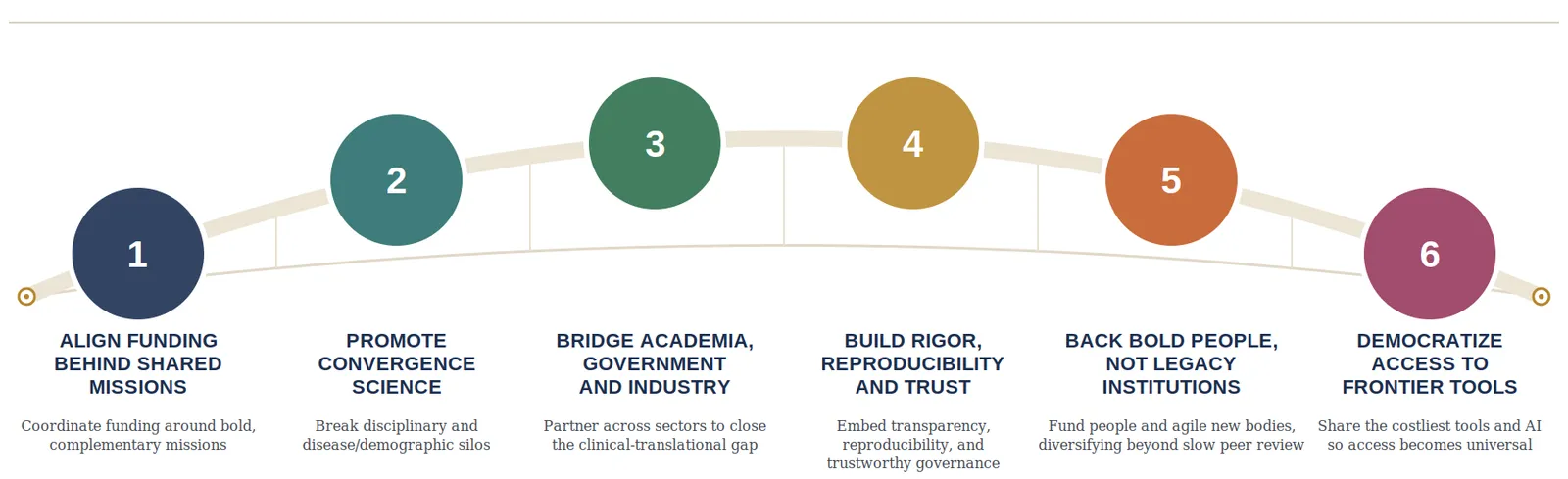
Exhibit 7.1 sets out six elements of reform, each with a direct consequence for the physician as explorer and designer.
One: align funding behind shared missions. Coordinating funding around bold, complementary missions instead of atomized investigator projects gives the clinically grounded question a place to be asked. Physicians rarely arrive with a fully formed research program. They arrive with a problem. Mission-aligned funding is the structure that can absorb a problem.
Mission-aligned funding concentrates judgment in whoever sets the mission, and a mission chosen badly crowds out the unexpected result nobody commissioned, which is, historically, where a good deal of the most consequential biology has come from. The answer is not to abandon missions but to hold both instruments at once: directed programs and untargeted investigator-led work funded as complements rather than as rivals for the same pool.
Two: promote convergence science. Breaking disciplinary and disease-or-demographic silos directly serves the physician's comparative advantage, which lies in noticing connections across domains, not in depth within one.
It also carries an implication for funders. Convergence cannot be assembled by inviting two established communities to collaborate on a proposal written in the vocabulary of one of them. It requires review panels competent to judge work belonging to neither field, which is a staffing problem as much as a policy one, and it explains why so much convergent work is funded, when it is funded at all, by the small number of bodies that have solved it.
Convergence also fails for a reason internal to the teams themselves. Whom to collaborate with is a decision routinely governed by confirmation bias. Investigators partner with those whose assumptions they already share, and the resulting team is convergent on paper and homogeneous in practice. AI-based deep data dives across the literature now make it possible to construct collaborator networks of a kind that were not previously findable, matching investigators by the structure of a problem instead of by proximity or acquaintance. Platforms that connect experts dynamically as scientific problems emerge would address a bottleneck that no funding mechanism has touched.
Convergence also requires a capability that the enterprise currently assumes and does not develop. Modern science has shifted decisively from single-investigator work to highly collaborative enterprises requiring coordination, alignment of incentives, mentoring, communication, and relationship management at considerable scale. Many trainees participate in such teams, and very few receive any formal preparation in how to lead one.
Team science leadership should therefore be treated as a core competency in its own right, not as a disposition some investigators happen to have. It should be supported by formal training programs in leading interdisciplinary biomedical innovation ecosystems, and by funding models that reward collaborative leadership capacity and not primarily individual productivity. At present there is neither clear funding nor infrastructure for developing it.
Three: bridge academia, government, and industry. Partnering across sectors to close the clinical-translational gap addresses the finding of Chapter II, that no actor currently owns the whole path and the gap lives in the seams. The physician is the natural occupant of those seams.
The practical forms are well known: secondments in both directions; joint and shared appointments; pre-competitive consortia; translational units with a foot in each sector; and sabbaticals that do not end a career. The obstacle is seldom enthusiasm. It is machinery: intellectual property allocation, conflict-of-interest management, differing tolerances for publication delay, and institutional accounting systems that cannot easily hold a person belonging to two employers. These are solvable administrative problems that have been allowed to stand as though they were principles.
A sharper version of the same problem arises inside the academic institution rather than between institutions. Faculty tracks that separate the physician from the scientist limit integration by design, sorting people into clinical or research careers at a point when the work increasingly requires both, and the financial drivers attached to each track pull in opposite directions once the sorting is done. Funding structures reinforce the division, since the major agencies remain poorly optimized for transdisciplinary work and thereby underwrite the silos everyone agrees are the problem.
The correction is to shift traditional faculty tracks toward integrated clinical-scientific-innovation career pathways, in which time spent in each is a proportion rather than an identity, and in which movement between them does not count as defection from either.
Four: build rigor, reproducibility, and trust. Embedding transparency, reproducibility, and trustworthy governance is usually presented as hygiene. It is better understood as the precondition for everything else in the exhibit, and it applies to the physician with particular force. A clinician deciding whether to act on a finding has no laboratory in which to check it. They are, structurally, a consumer of other people's rigor. Chapter II's finding that model-system invalidity and irreproducibility sit near the top of the translational gap's drivers is the same observation from the other end.
The measures are known and unglamorous: preregistration; published protocols and analysis plans; data and code availability; registered reports; adequately powered confirmatory studies; and the treatment of validation as a first-class scientific activity instead of work no career rewards.
Five: back bold people, not legacy institutions. Funding people and agile new bodies, and diversifying beyond slow consensus peer review, addresses a failure mode that is well documented and seldom acted upon. Committee review reliably selects for the incremental, because a proposal a majority of reviewers finds plausible is by construction one that does not challenge what the majority already believes.
Alternatives exist and are being tested: person-based in place of project-based funding; program-manager models with authority to make concentrated bets; lotteries among proposals judged above a quality threshold; and fast, small, low-bureaucracy awards. A clinician with an unusual idea and no track record is exactly the applicant the conventional system screens out, and exactly the applicant these mechanisms exist to admit.
Six: democratize access to frontier tools. Sharing the costliest instruments and AI so that access becomes universal is the single most consequential change for the physician creative, who typically lacks institutional infrastructure. When frontier capability is a service rather than a possession, the constraint on discovery shifts from equipment to imagination, which is precisely where the clinician's advantage lies.
What a clinician needs access to is not only compute. A physician with a good question typically needs four things. The first is a cohort, meaning permission and a mechanism to identify the patients who match a definition. The second is biospecimens, meaning the tissue already banked from those patients and the right to use it. The third is statistical and methodological support at the design stage, not after the data is collected. The fourth is regulatory navigation, since the review submission is where most clinician-originated projects die.
Compute matters, and for most of the work described in this chapter it is the least binding of the constraints. An access program that supplies frontier models while leaving the other four untouched will produce impressive analyses of data nobody could obtain.
Concrete precedents for that sixth element now exist, and they answer the objection that democratized access is impractical. Consider publicly convened compute. The United States National AI Research Resource, launched as a pilot in 2024 and led by the National Science Foundation with thirteen federal agencies and twenty-eight non-governmental partners, provides no-cost access to computing, data, models, and expertise. It has supported more than six hundred research projects and six thousand students across all fifty states, and requires that results be published openly.35 Europe's EuroHPC Joint Undertaking is building an analogous network of AI Factories, and the United Kingdom has stood up a national AI Research Resource on the same principle.
Consider pre-competitive open consortia. The Structural Genomics Consortium has for two decades placed the structures, reagents, and chemical probes it generates, including those produced jointly with industry partners, into the public domain without patent restriction, on the argument that pre-competitive biology is not where companies actually compete.35 Consider federated architectures. The MELLODDY consortium united ten pharmaceutical companies to train a shared model across some forty thousand assays and more than twenty million compounds without any partner exposing its data, by moving the model to the data instead of the data to the model.35
And consider philanthropic infrastructure. The Chan Zuckerberg Initiative's GPU cluster for predictive cell models, built on a corpus of tens of millions of standardized single cells, is a private actor constructing a frontier resource explicitly for community use.
None of these solves the problem, and each has limits. Allocation remains competitive, the resources are computational and not clinical, and access to compute is not access to the wet-laboratory instruments much of biomedicine still requires. Together, though, they establish the principle. Frontier capability can be organized as a shared utility, and wherever it has been, the constraint on who may attempt a discovery has visibly loosened.
One dimension of the sixth element goes largely unaddressed by all of these, and Chapter X returns to it. Every example above is convened within a wealthy jurisdiction, and eligibility generally follows national boundaries. A shared utility that stops at a border reproduces at a different scale the inequity it was built to relieve, and the researchers most constrained by the cost of frontier instruments are those outside the countries funding them. Truly open resources, mirrored data, regional compute, and consortium membership that does not depend on the ability to contribute proprietary assets are the versions of this element that would matter globally.
Several substantial reviews of the past three years address the same territory from different national vantage points, and they converge more than they diverge. In the United Kingdom, Sir Paul Nurse's independent review of the research, development and innovation system identified problems it described as long-standing and serious. It set out ten attributes of a healthy system, among them financial sustainability, research quality and agility, cross-sector permeability, a skilled workforce, good research culture, and strong international collaboration. Its twenty-nine recommendations treated permeability between sectors and the position of clinical academics working in health services as central.36
Lord O'Shaughnessy's review of commercial clinical trials, and the delivery program that followed it, addressed the same enterprise at the point of execution.36 In the United States, the National Academies' sequence on academic research investment, research integrity, and reproducibility led to the standing Strategic Council for Research Excellence, Integrity, and Trust, an institutional answer to the fourth element rather than another report about it.36 Between them these cover elements one through five.
Two themes recur across those reviews that go beyond the six, and both determine whether the six can work. The first is research culture: working conditions, incentive structures, career security, supervision, and how people are treated inside the enterprise, now treated in this literature as a determinant of scientific quality rather than as a welfare matter. The elements in Exhibit 7.1 are structural, and culture decides whether structures are used as intended or merely complied with.
The second is sustainability: the repeated observation that the financial model underpinning academic research is not stable, that indirect-cost arrangements are under active pressure, and that reform cannot be designed as though the funding base were fixed. Chapter XII returns to both, and neither is a problem physicians can solve alone, which is why the profession has to be present when they are discussed.
The recommendation is that these six be pursued together rather than selectively, since each compensates for a failure mode of the others. And the physician must further be positioned to work through the bioethical complexities of frontier theranostic technologies and their associated regulatory frameworks, a competence that no other participant in the research enterprise is trained to supply.
Reform programs of this kind are prone to being declared complete, so the test of progress should be stated. The question is not how much was spent, how many centers were designated, or how many partnerships were announced. It is whether a clinician with a good question and no infrastructure can now get it answered, whether the interval between noticing something at the bedside and running a first experiment has fallen, and whether the people doing so look different from the people who did it a decade ago. Those are measurable quantities. None of them is currently measured.
Culture decides whether any of this reaches the person this chapter is about. A clinician who enters discovery late, works at it part-time, and arrives without a track record is the first person a poor research culture excludes: too junior for the funding mechanisms; too unproven for the collaborations; too intermittently available for the group meeting; and too easily read as a visitor.
Cultures that tolerate that exclusion are not merely unpleasant. They are the specific reason the claim that every physician can be a creative fails in practice, since the barrier is rarely capability and almost always standing. What is required is that part-time, late-entering, clinically grounded contributions be treated as normal science, not as a hobby indulged. Chapter XII takes that up as an institutional matter. A laboratory head can settle it for a single group without waiting.
Notes
- 35National Science Foundation, National Artificial Intelligence Research Resource (NAIRR), pilot launched 2024; EuroHPC Joint Undertaking, AI Factories initiative; Structural Genomics Consortium, Open Science Policy; MELLODDY consortium, "Industry-scale orchestrated federated learning for drug discovery" (Innovative Medicines Initiative project 831472); Chan Zuckerberg Initiative, GPU cluster for predictive cell models (2025).
- 36Paul Nurse, Independent Review of the UK's Research, Development and Innovation Organizational Landscape (London: Department for Business, Energy and Industrial Strategy, March 2023); James O'Shaughnessy, Commercial Clinical Trials in the UK: The Lord O'Shaughnessy Review (London: Department of Health and Social Care, 2023), and Department of Health and Social Care, Transforming the UK Clinical Research System (August 2025 update); National Academies of Sciences, Engineering, and Medicine, Optimizing the Nation's Investment in Academic Research (2016), Fostering Integrity in Research (2017), and Reproducibility and Replicability in Science (2019), from which the Strategic Council for Research Excellence, Integrity, and Trust was established.
Ideas on this section
No ideas linked here yet. Propose an extension, a counterpoint, or a way to test a claim.
Discussion
Annotate this section — questions, counterpoints, references.
No comments yet. Start the thread.